


British Medical Association Members Handbook 1963
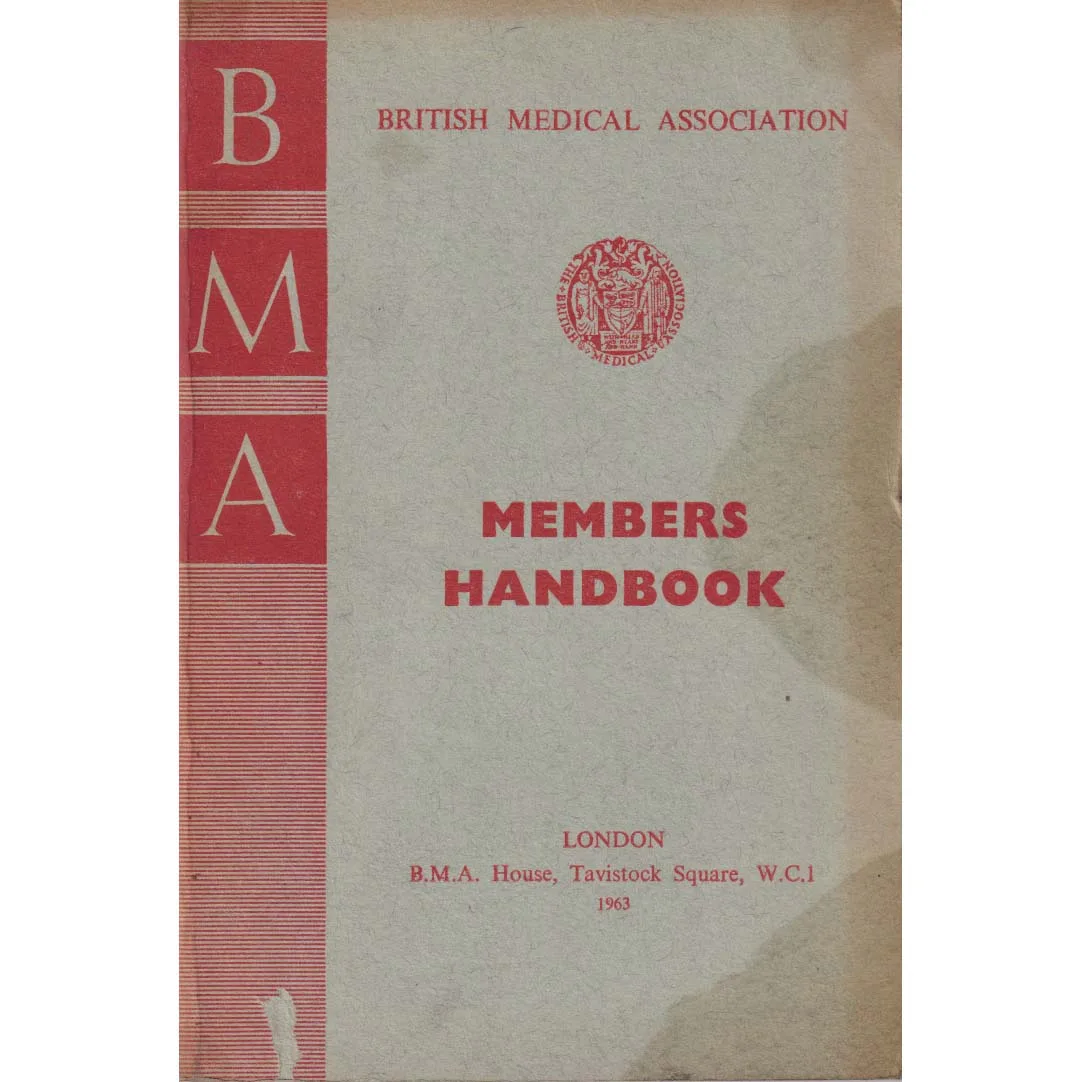
Publisher: British Medical Association
Format: Paperback
ISBN: none
British Medical Association Members’ Handbook 1963 (1963) by British Medical Association — British Medical Association
ISBN: None (because 1963 assumed members could identify a handbook without a barcode)
Condition: Good (as sold by Crappy Old Books, where “Good” means “still very capable of sounding official”)
Some books are thrilling. This one is authoritative—which is a different kind of thrill, especially if you enjoy the idea of a nation held together by committees, procedures, and people who can pronounce Latin without blinking.
The British Medical Association Members’ Handbook 1963 is exactly what it says on the tin: a practical, institutional guide for BMA members in the early 1960s, when the NHS was still relatively young, white coats were whiter, and “administration” was something you did with a fountain pen and an expression of steady resolve. It’s not a medical textbook; it’s the machinery around the medicine—membership, organisation, rules, guidance, and the sort of professional infrastructure that quietly makes a massive system function while pretending it’s all very straightforward.
Reading it now is like opening a time capsule of British professional life. You can almost hear the clack of typewriters and the gentle clearing of throats in committee rooms. It’s full of the kind of matter-of-fact institutional voice that implies: these are the correct procedures; do not improvise. And yet, that’s precisely why it’s fascinating. This is what “the profession” looked like on paper in 1963—how it described itself, organised itself, and communicated its role in a changing society.
There’s also a delicious irony in how calm it all is. The 1960s were not exactly a quiet decade, and healthcare certainly wasn’t a gentle topic. But the handbook’s tone is pure administrative serenity—because nothing says “we are in control” like neatly arranged sections and confidently numbered points. It’s the bureaucratic equivalent of a stethoscope: reassuring, slightly cold, and undeniably serious.
As an artefact, it’s ideal for collectors of medical ephemera, NHS-era history, social historians, prop people (nothing says “authentic doctor’s office” like real period paperwork), and anyone who finds comfort in the idea that even complex institutions can be reduced to a handbook—however optimistic that may be.
This copy is listed as Good by Crappy Old Books, meaning it’s solid, readable, and has survived decades of existence with its dignity largely intact. Expect some honest age: perhaps a bit of rubbing, mild toning, maybe the faint impression it once lived in a briefcase alongside spectacles and a packed lunch. But fundamentally it’s still doing what it was made to do—sit there looking official.
Buy it if you like:
-
vintage institutional publications with maximum seriousness
-
snapshots of professional life in mid-century Britain
-
medical history adjacent to the medicine itself (systems, structures, culture)
-
books that feel like they should be stamped, initialled, and filed
British Medical Association Members’ Handbook 1963: a quietly compelling slice of British medical history—less scalpels, more committees; fewer diagnoses, more structure. In Good condition from Crappy Old Books, ready to lend your shelf an air of competence and mild authority.
Keep browsing: See more Academic books Other books by British Medical Association
